Lennen Bilingual School

Getting ready for school without the yelling or the last-minute rush

It's seven fifteen, the backpack isn't zipped, the toast is getting cold, and one sock has vanished into thin air. This morning looks a lot like many others in homes with young children. And yet, small shifts in rhythm and simple gestures can turn this daily scramble into something calmer — a quieter moment where everyone, child and parent alike, finds their footing before the day begins.

What really happens before eight thirty

Mornings in families with young children are never just a matter of logistics. They are packed with emotions, transitions, and sometimes quiet acts of resistance. A three- or four-year-old does not experience time the way an adult does. Urgency means nothing to them. What matters is the warmth of the pajamas they don’t want to leave behind, the toy they glimpsed in passing, or the need for a hug before stepping into the day.
When a parent speeds up, the child slows down. It’s almost mechanical. The louder the voice, the more they freeze or drift. This isn’t defiance or laziness — it’s their way of saying they need a rhythm that belongs to them. Developmental psychology research confirms this: before the age of six, a child’s ability to handle transitions depends largely on the emotional climate around them. A tense morning produces a tense child. A gently structured morning produces a child who is more available for the day ahead.
The real challenge, then, isn’t about moving faster. It’s about preparing the ground differently — anticipating what can be anticipated, letting go of what doesn’t matter, and placing connection at the center of this brief, dense moment.

Breakfast morning

Slowing down to move forward

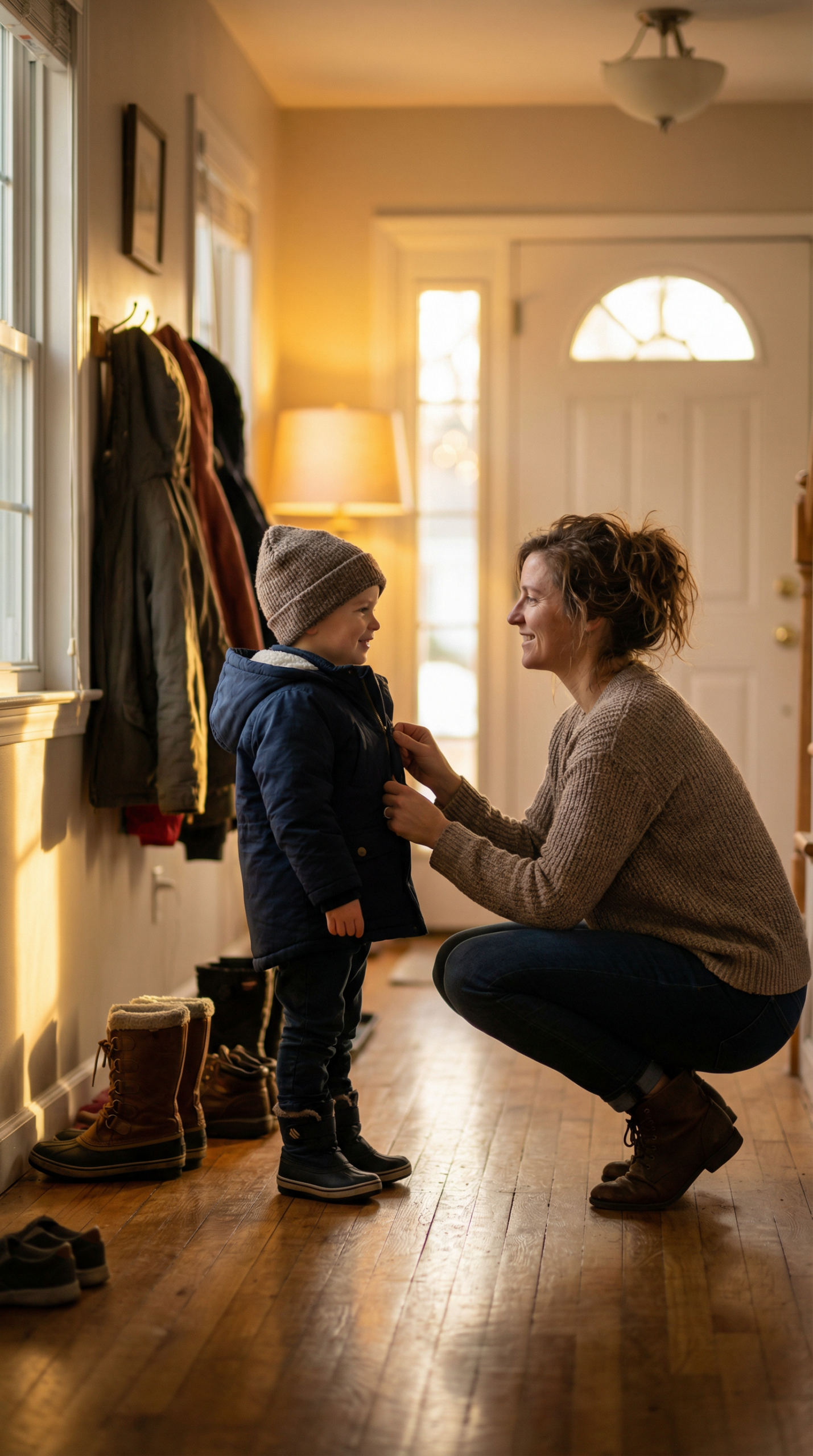
There’s a paradox many parents discover through experience: slowing down actually saves time. When you take thirty seconds to kneel at your child’s level, calmly describe what comes next, or let them put on their jacket themselves even though it takes longer — the rest follows more naturally. The child cooperates because they feel included in the process, not dragged through it. It’s not a magic formula. It’s a shift in perspective, gradual and imperfect, but surprisingly effective.

Prepare the night before

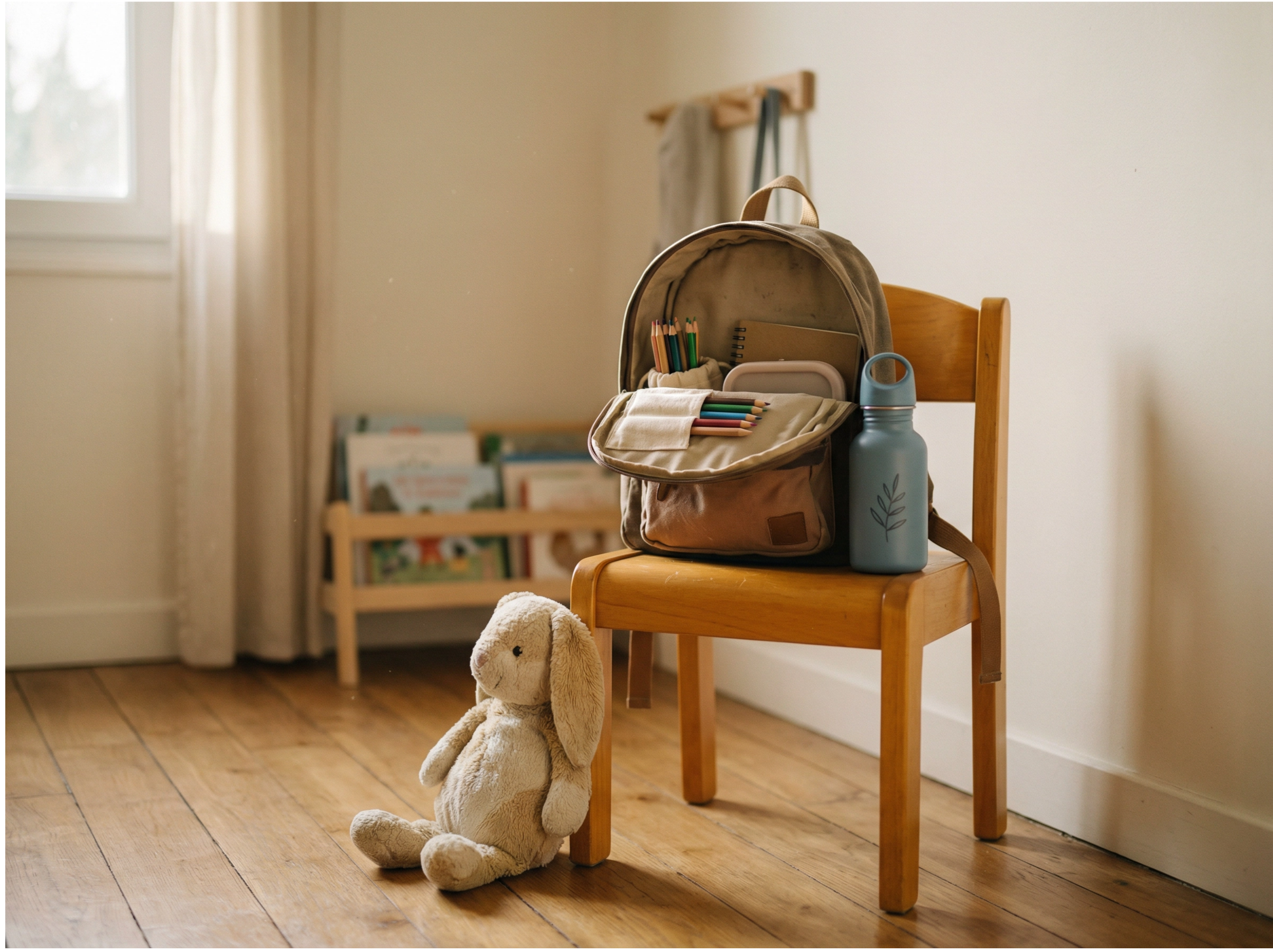
Clothes set out on the chair, the bag checked, breakfast thought through. These small gestures, carried out in the calm of the evening, remove a significant portion of the next morning’s mental load. A preschool-age child can even take part in this ritual: choosing their shirt, slipping their water bottle into the bag. It’s a quiet first step toward independence.

Give them time to wake up

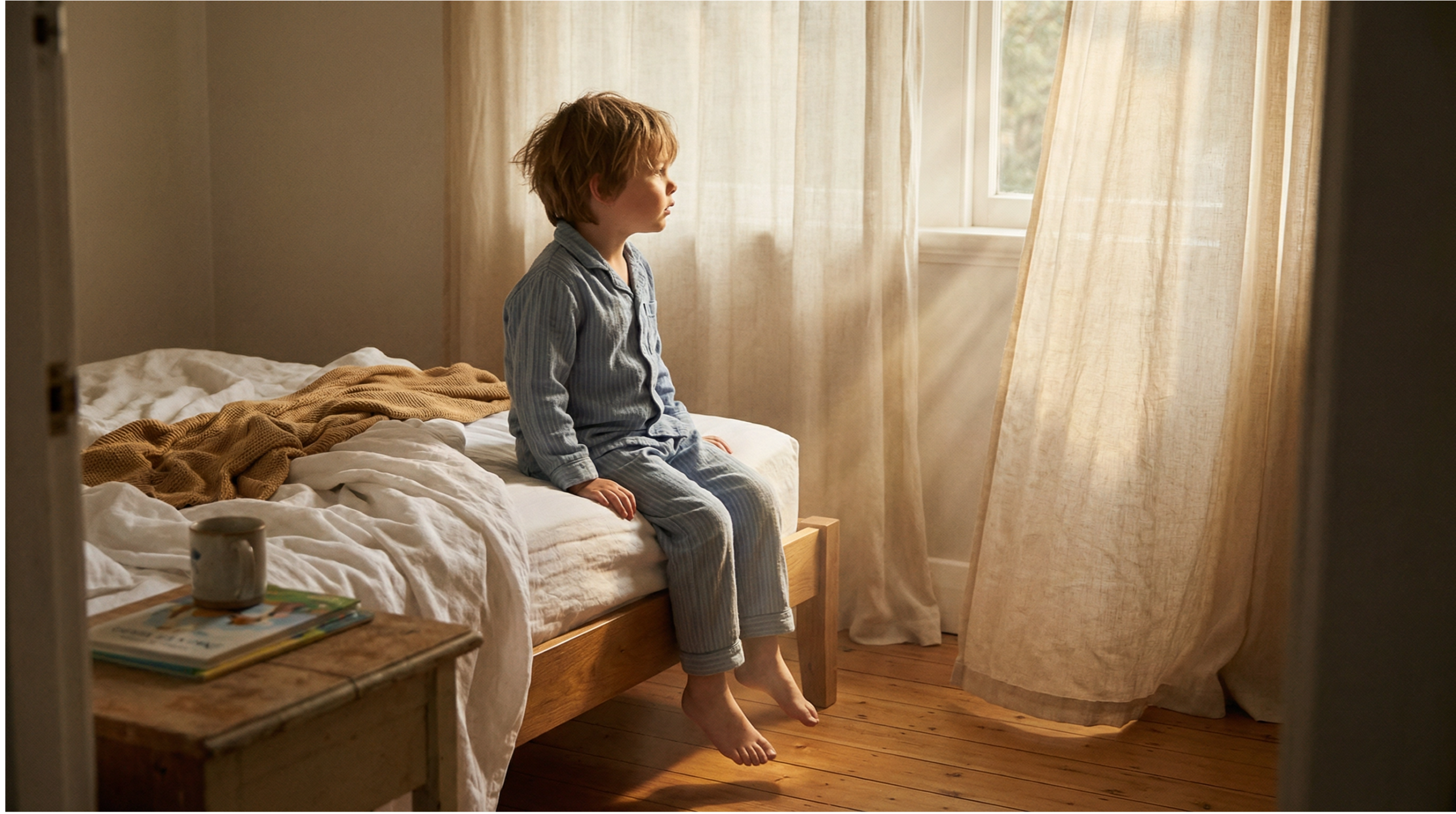
A child needs a few minutes to surface. Pulling them out of bed and sitting them straight at the breakfast table isn’t always the right sequence. Some need silence, a cuddle, a glance out the window. Honoring this threshold into the day, even for five minutes, eases the tension for everything that follows.

Replace instructions with visual cues

Instead of repeating the same directions ten times, some families display a simple illustrated sequence in the hallway or bathroom. The child follows it at their own pace, gaining a sense of their own ability to navigate the morning. It isn’t a rigid tool — it’s a gentle way of handing them the keys to their own routine, without depending on a parent’s constant voice.

Accept that some mornings won't go as planned

Even with the best preparation, there will be mornings when nothing works out. A missing shoe, an unexpected refusal, a sudden wave of sadness. These mornings are not failures. They are part of the real landscape of parenting. What matters isn’t the perfection of the routine but the consistency of the intention: staying present, adjusting without collapsing, and trying again tomorrow.