A child does not experience high expectations the same way depending on the gaze that accompanies them. When an adult expects a great deal while conveying genuine belief in the child’s ability, effort takes on a different meaning. It is no longer about meeting an external standard — it becomes a way of discovering oneself through challenge. Research by Stanford psychologist Carol Dweck on growth mindset has shown that children praised for their effort rather than their results develop a healthier relationship with difficulty. They persist longer, accept mistakes as part of the process, and build a confidence that does not hinge on performance.
Conversely, warmth without structure can become a source of insecurity. A child who has never encountered a clear boundary struggles to find footing. He searches for markers, tests limits, starts over, without always finding the solid ground he needs to move forward. The real question, for parents and educators alike, is not how to balance one against the other. It is how to embody both at once. High expectations carried by a trusting gaze. Rigor that does not judge, but elevates.

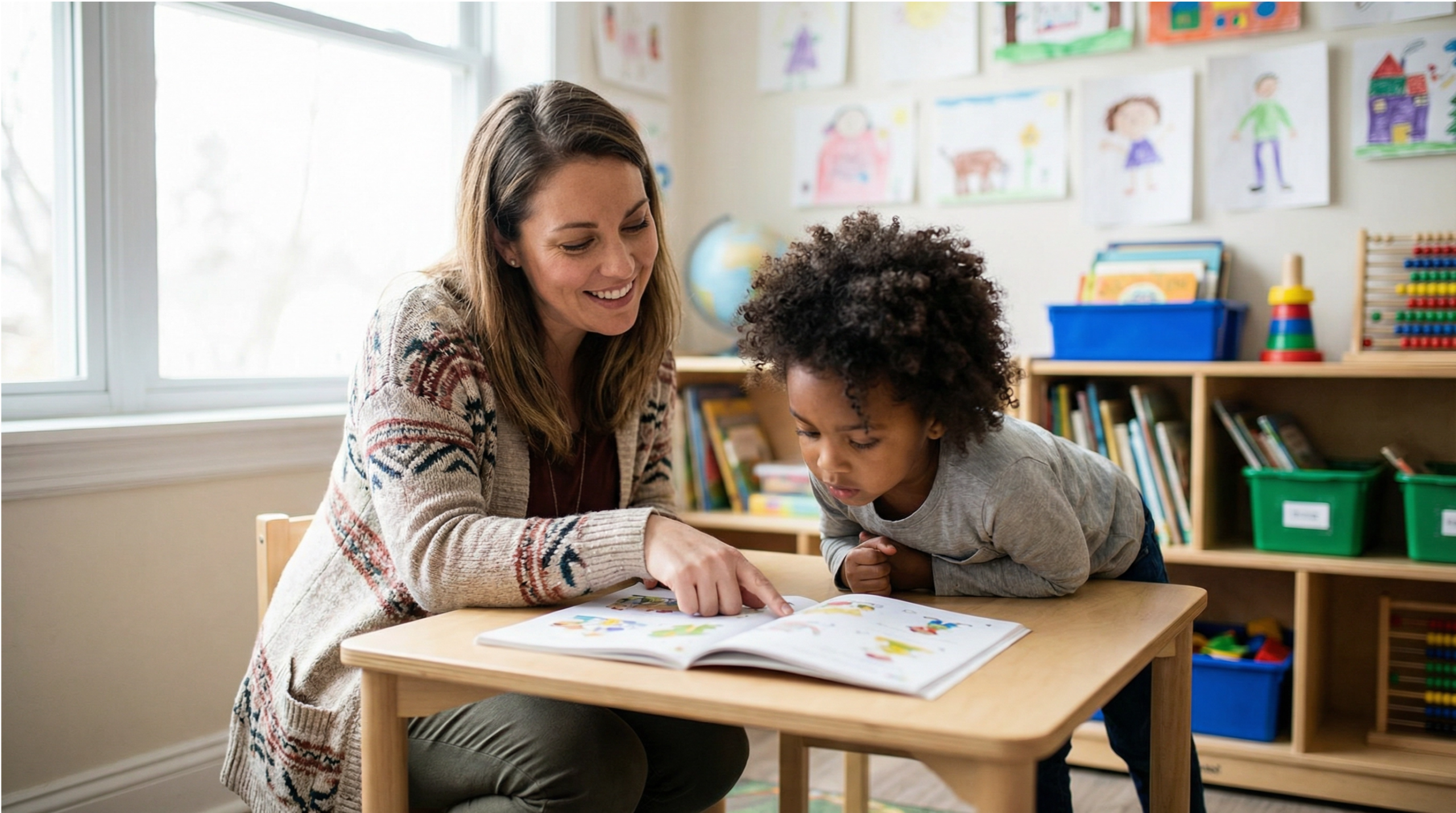
In a classroom where every child is known by name, by strengths and vulnerabilities, this balance is built day after day. The teacher who asks a student to try again while sitting beside her to understand the stumbling block is not choosing between rigor and kindness. She is doing both in the same gesture. It is in these small moments that a child internalizes a crucial lesson: people can expect a lot of me without putting me at risk. This is not a theory. It is a lived experience, repeated over time, shaping how the child will approach every future challenge.
A child who knows what is expected of him is a child who can relax. Structure — clear rules, predictable schedules, stated expectations — does not suppress freedom. It makes freedom possible. Developmental psychology research consistently shows that emotional security stems as much from the warmth of relationships as from the steadiness of the framework around them. When the ground is stable, the child is free to explore.
When a child makes a mistake and the adult receives it without drama, something essential happens. The child learns that getting it wrong does not diminish who he is. In a setting that is both demanding and safe, the mistake becomes a tool. It stops being a verdict and becomes a passage — a learning moment that teacher and child walk through together, without shame or pressure.
Children are formidable observers. They pick up on how a parent responds to difficulty, how effort is spoken about, the tone used to discuss a report card. The balance between rigor and warmth cannot be decreed — it is lived. And it is by seeing it embodied day after day that a child comes to regard it as simply the way things are.
The French educational tradition values rigor, structure, and mastery of fundamentals. The American approach emphasizes self-confidence, initiative, and personal expression. Far from being mutually exclusive, these two philosophies complement each other. Where they meet, they trace a path that sacrifices neither ambition nor the attention each child deserves.