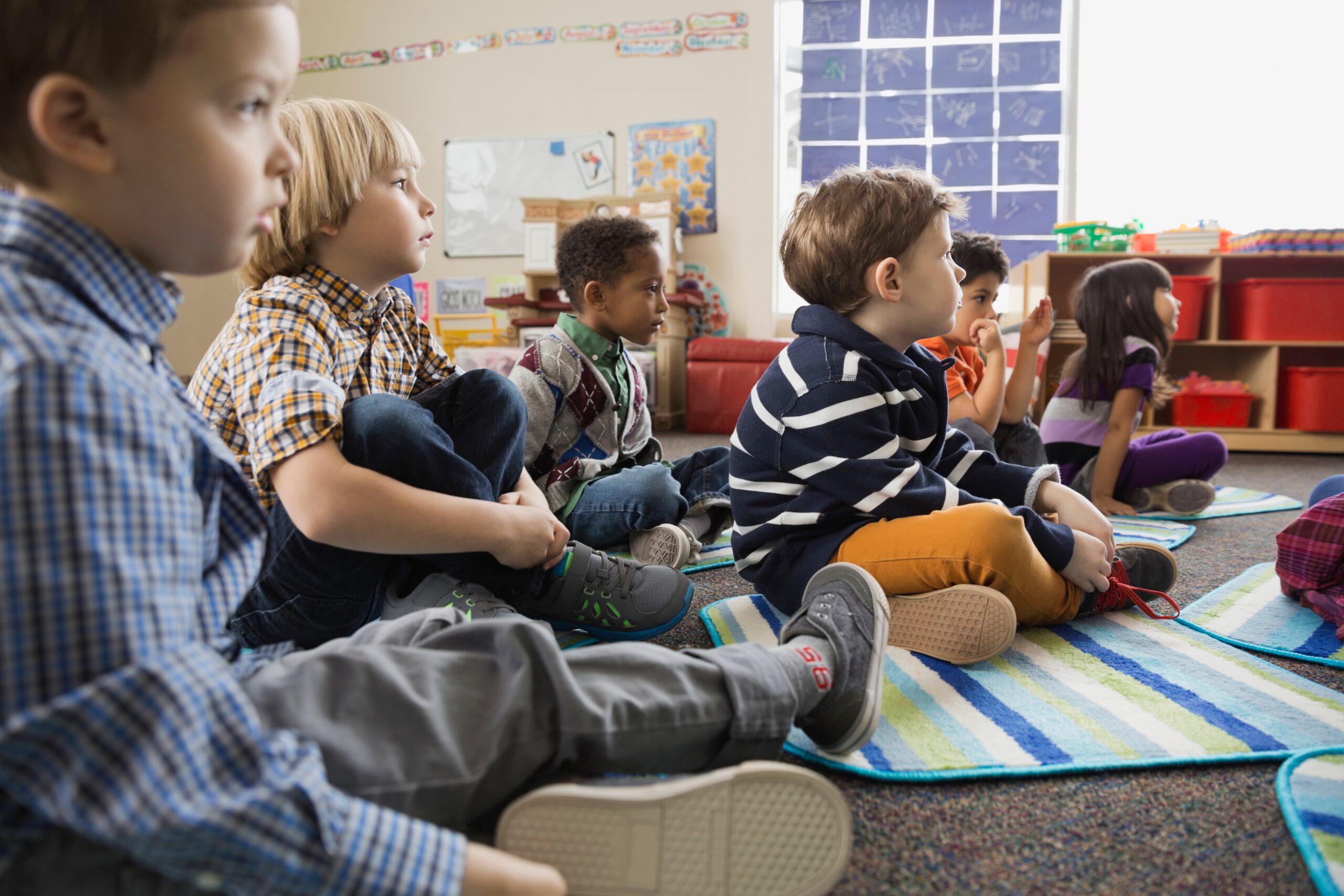
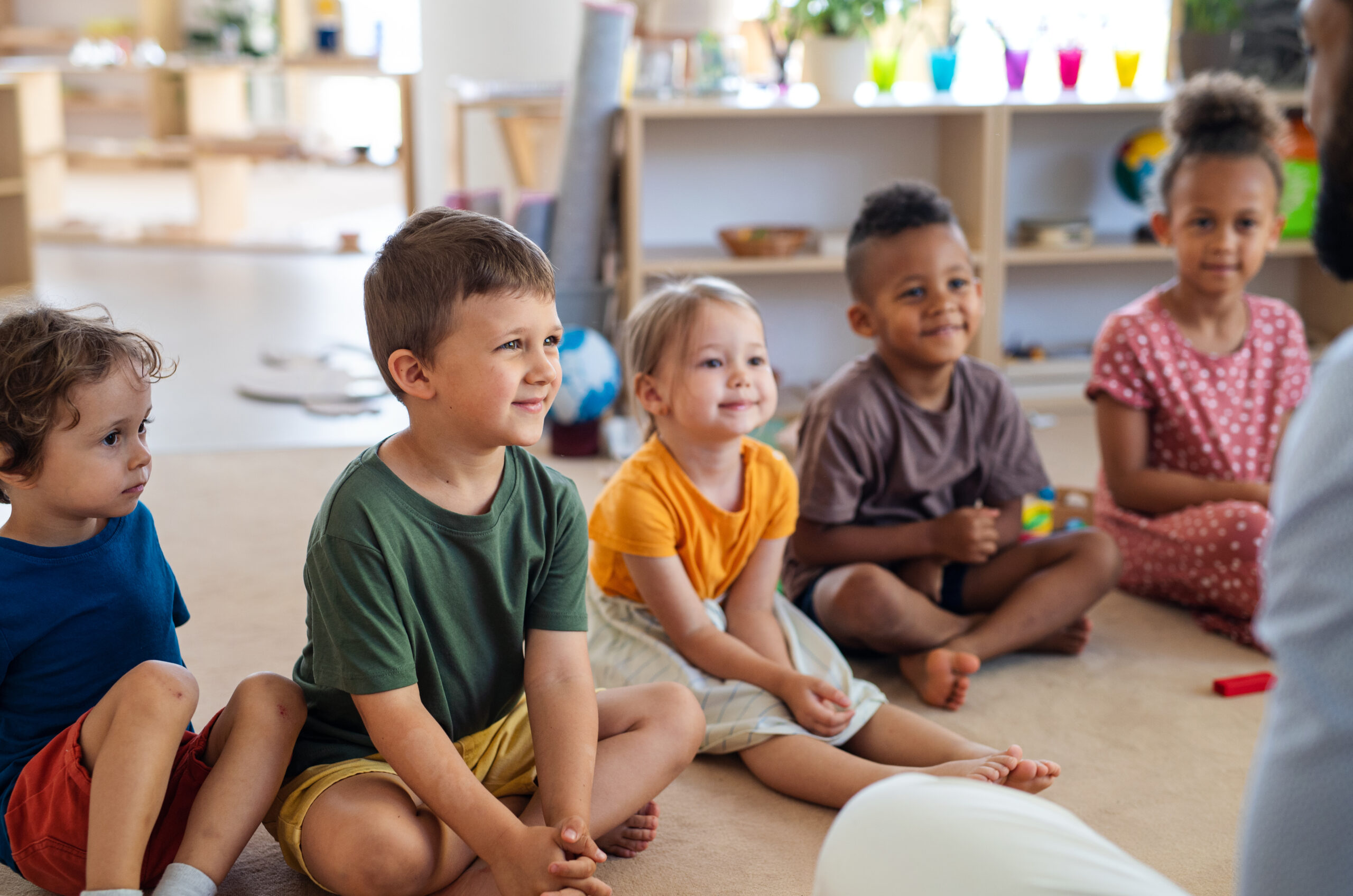
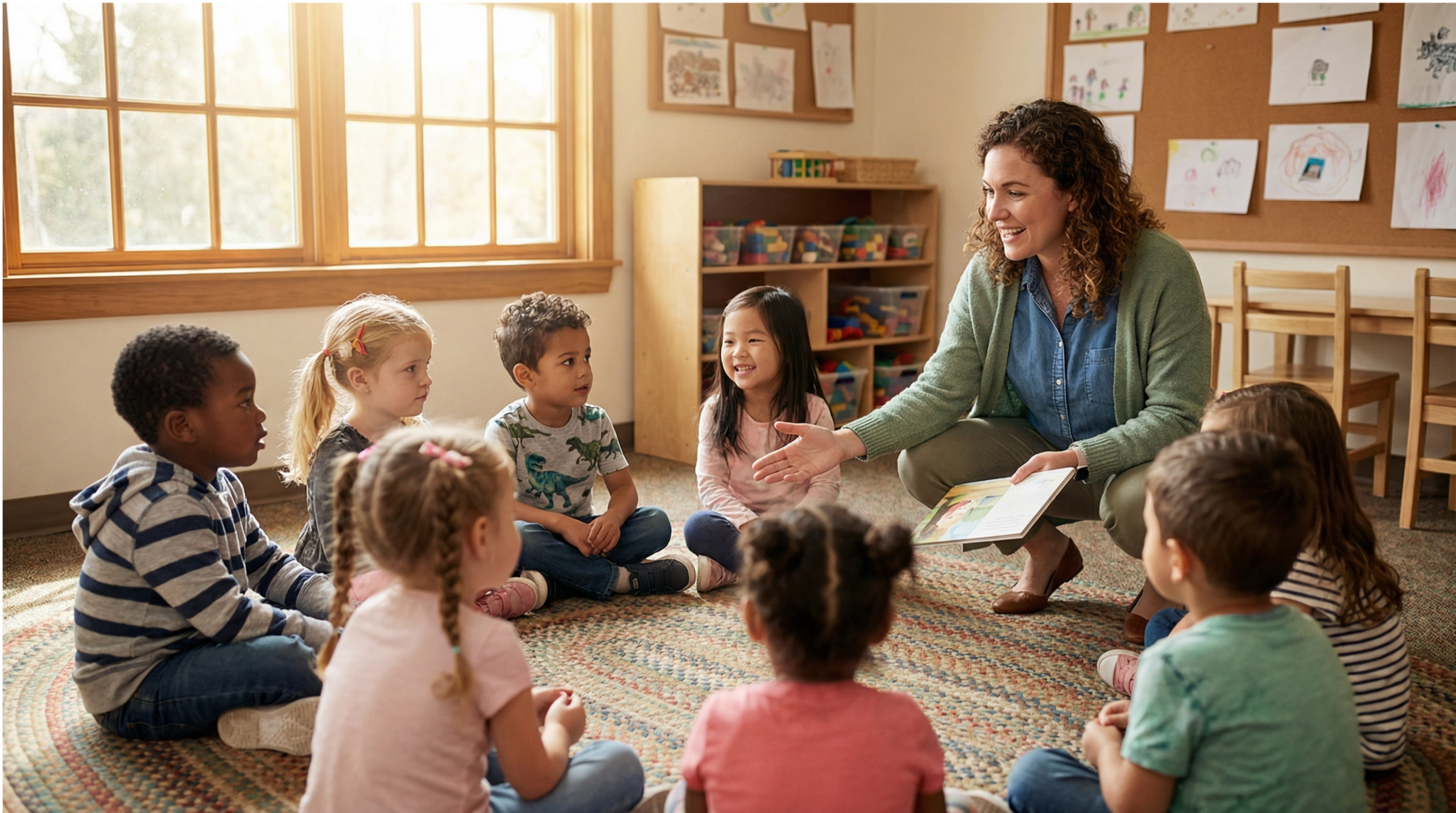
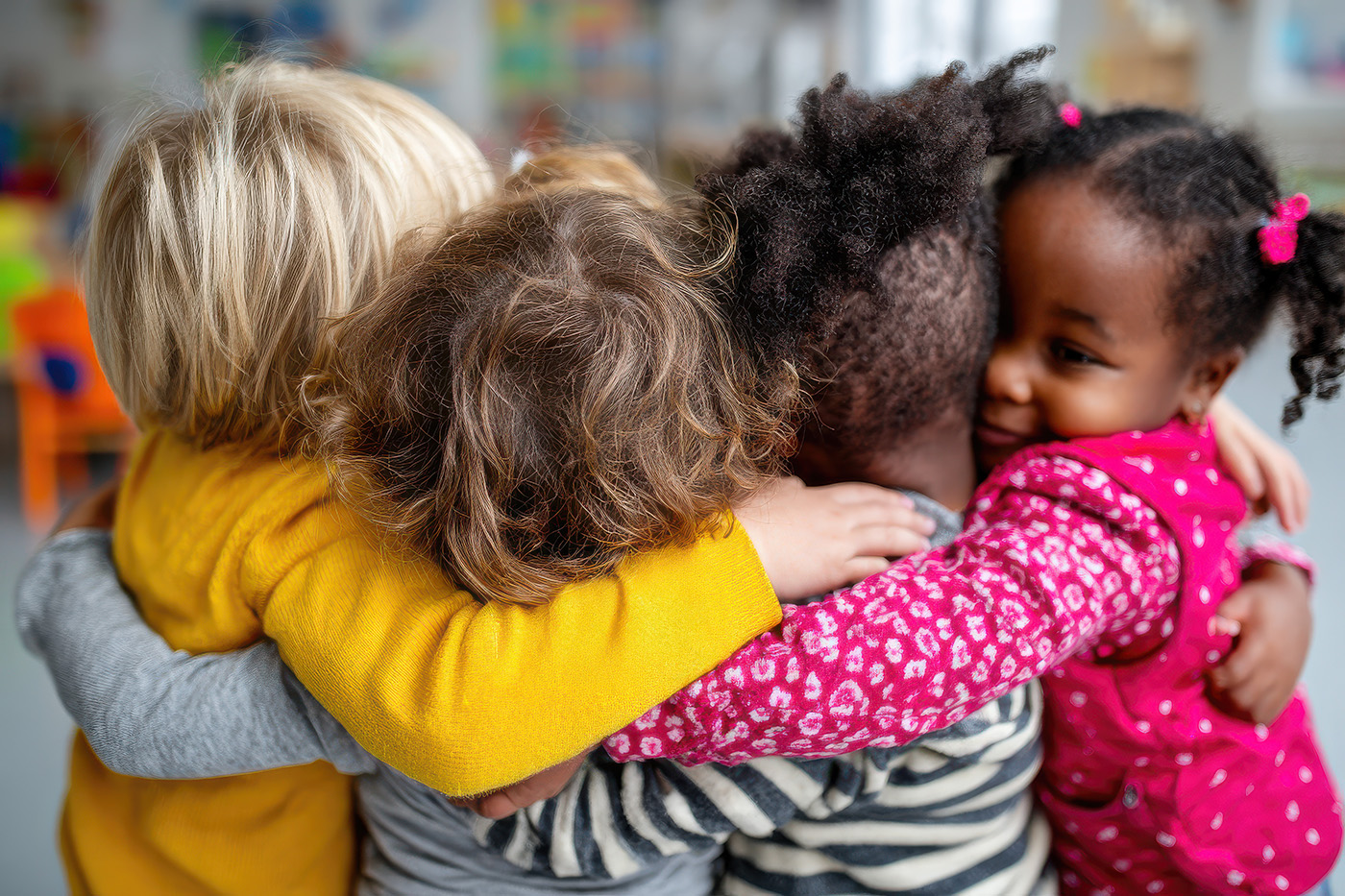
The morning always begins with circle time. Children settle in, some still sleepy, others already buzzing with something to share. The French-speaking teacher opens the day. She names the day, checks the weather, asks who’s here and who’s missing. Answers come in a blend of languages that bothers no one. One child says « il pleut » while another confirms “yeah, it’s raining.” Nobody corrects. Meaning flows, and that’s what matters.
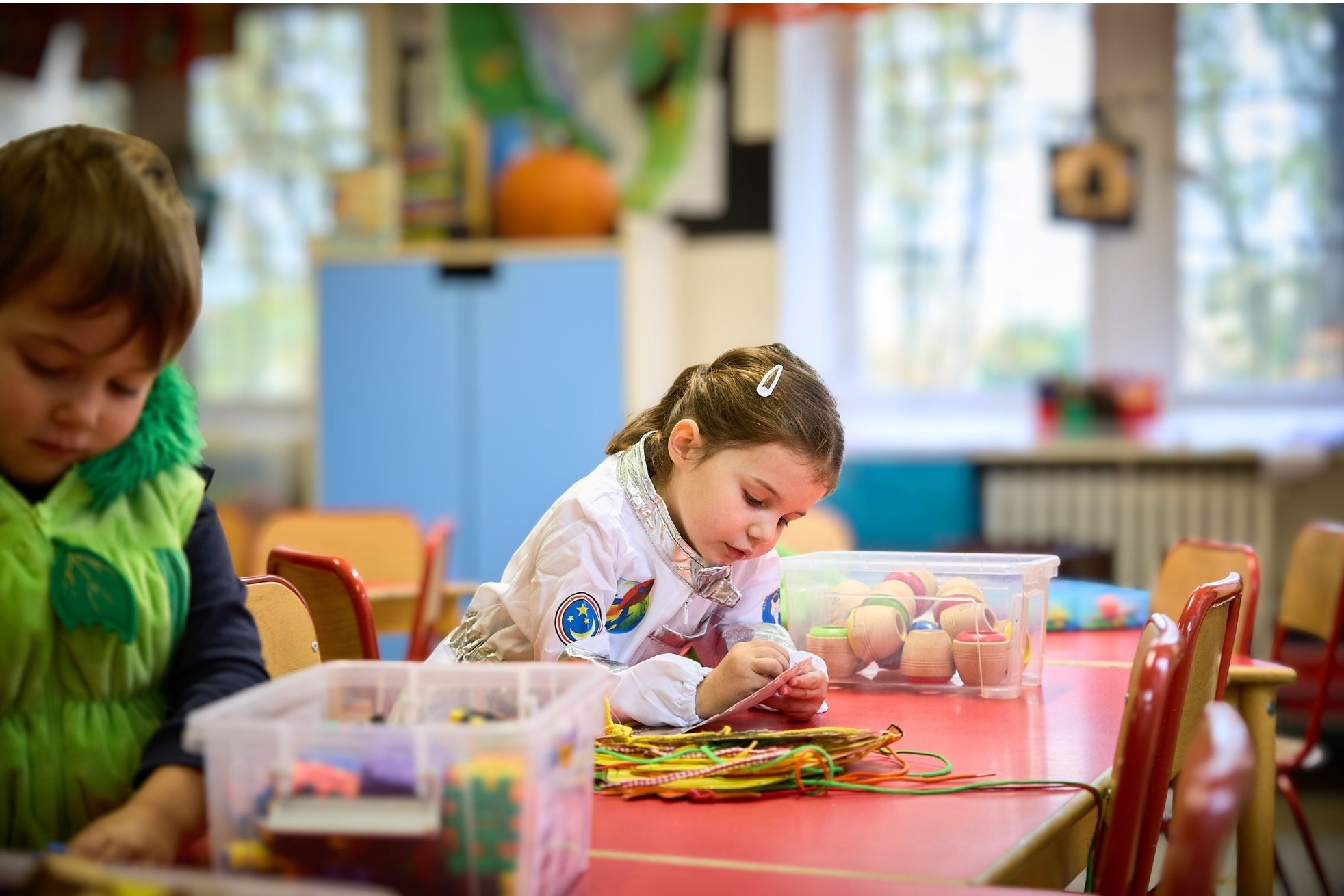
Then comes workshop time. Part of the group joins the American teacher for an English-language project — painting this morning, around the theme of seasons. The other half stays in French for a handwriting activity. Instructions are given in the language of the workshop, accompanied by gestures, pictures, natural repetition. No child is asked to translate, perform, or prove anything. Bilingualism here is not a test. It’s a landscape you grow up in, at your own pace, with your own words.
When a parent picks up their child at noon, they see a drawing, a smile, maybe a paint stain on a t-shirt. What they don’t see is the moment their child waited for their turn without crying. The one where they said “merci” in French for the first time, without thinking about it. The one where they comforted a classmate by placing a hand on their shoulder, wordlessly, because tenderness needs no language. Those moments don’t appear in any notebook. But they’re the ones that slowly build a deep, lasting confidence.
Transitions between French and English are never abrupt. A song, a gesture, a change of space is enough to signal the shift. Children find a natural rhythm in it, like a musician changing key without the listener quite noticing. This fluidity isn’t accidental. It’s the result of an organization designed so that language is never a barrier, but always an open door.
In preschool, the most valuable skills are acquired invisibly. Sorting shapes is doing math. Listening to a story is structuring thought. Playing with others is learning negotiation. None of this carries a technical name in the mouth of a three-year-old. And that’s a good thing. Knowledge arrives through the back door, carried by pleasure, imitation, and curiosity.