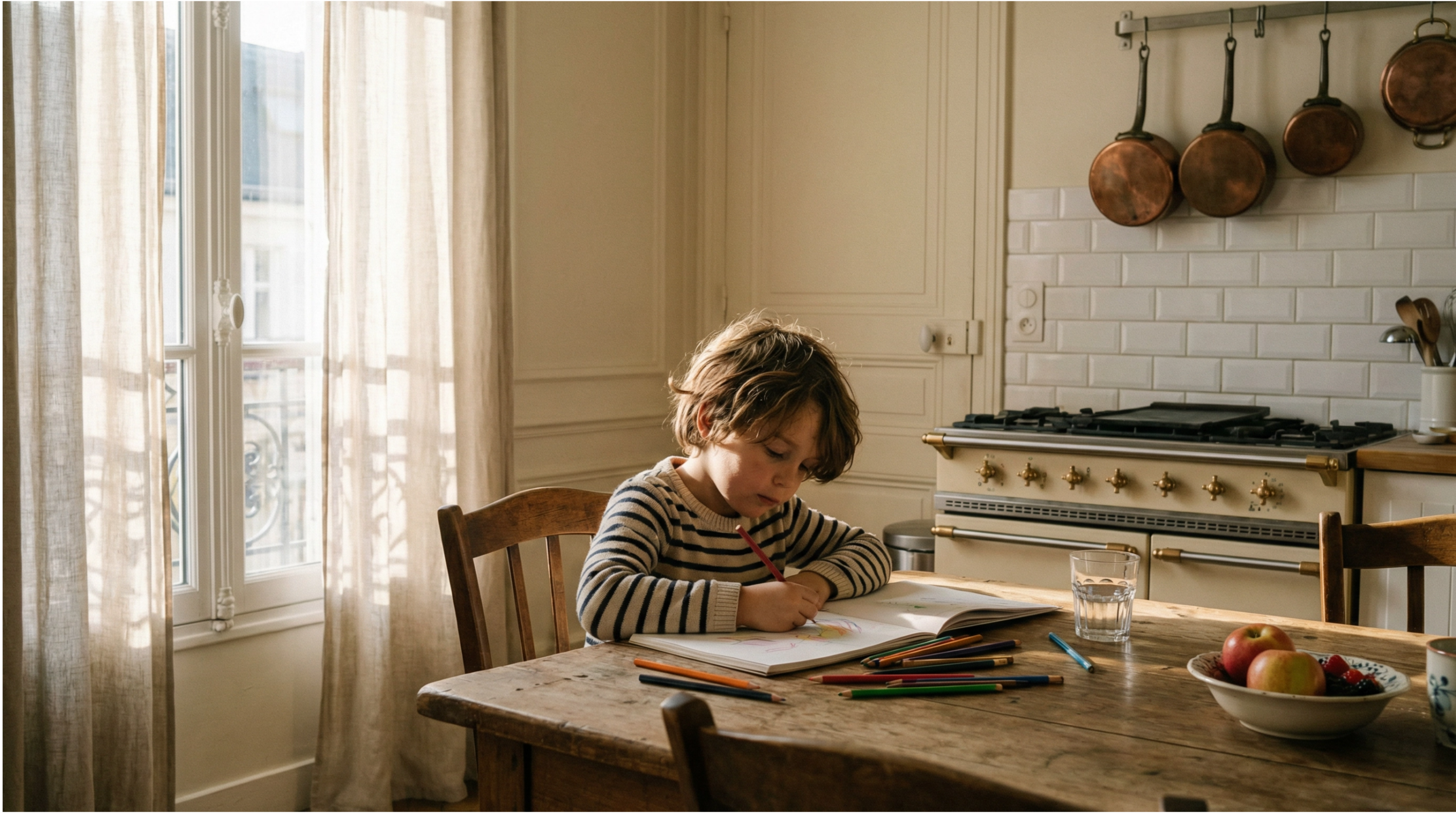
There’s a moment, rarely talked about, when a parent realizes the words they use to raise their child no longer carry the same weight. The way you say “no,” the way you encourage, the way you set boundaries — all of it carries a culture. And when you change countries, that culture hangs suspended between what you once knew and what you’re just beginning to discover.
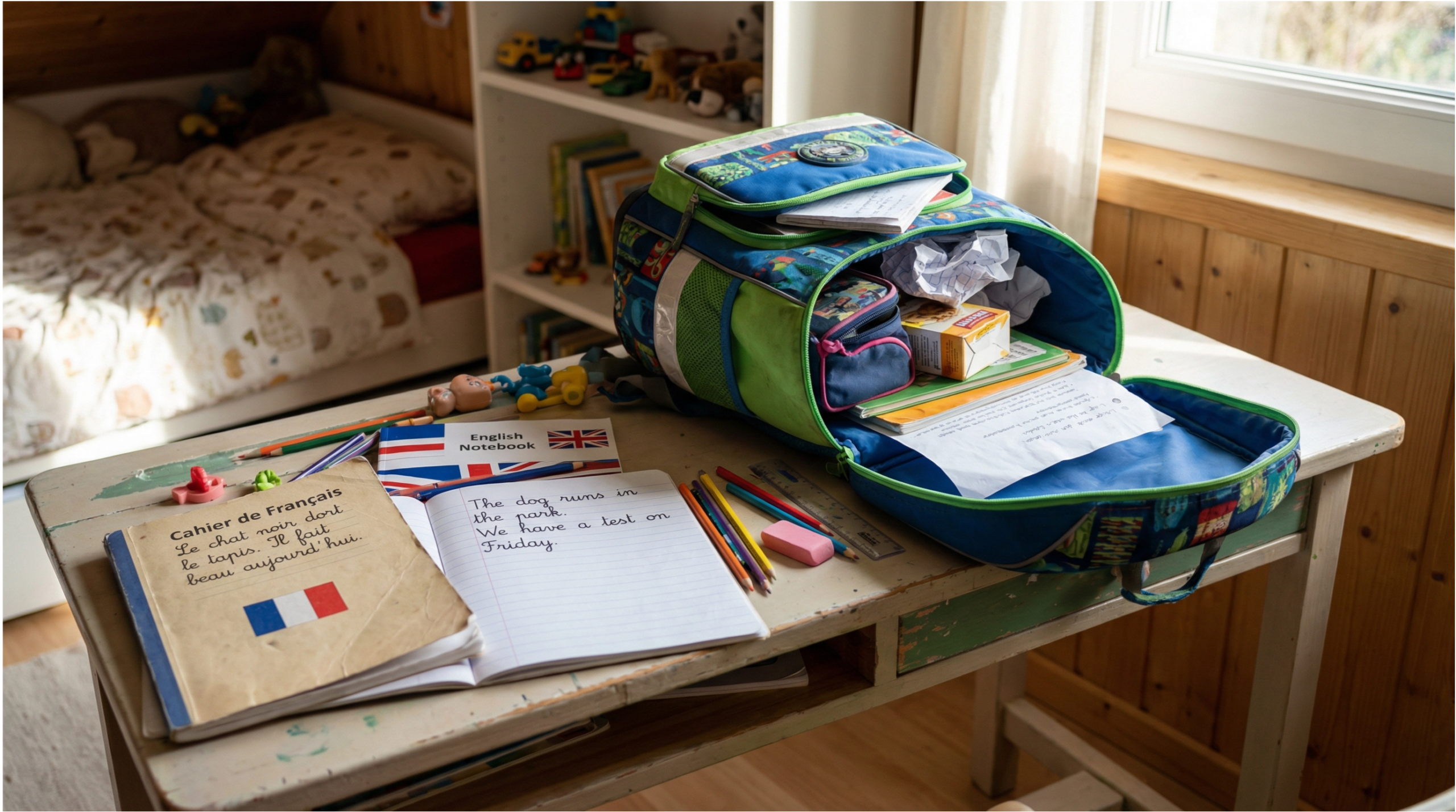
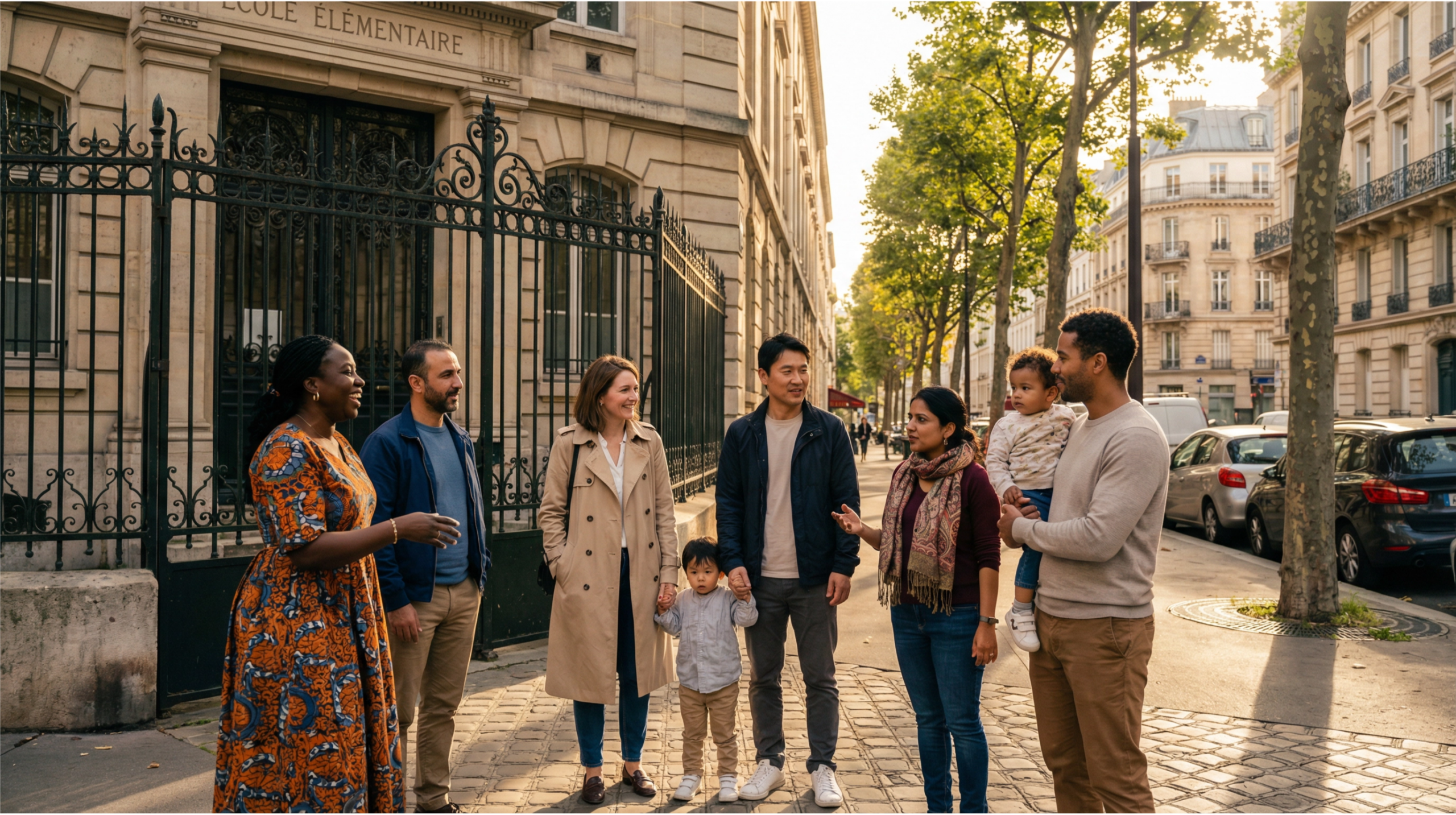
For an American family arriving in Paris, the surprise sometimes comes from what school expects of children: a certain autonomy in the relationship to knowledge, a different posture toward adults, a way of eating lunch together that is anything but insignificant. For a French family returning from years abroad, it’s the reverse that unsettles: rediscovering a system you thought you knew, only to find it no longer matches who you’ve become.
This in-between is neither a problem nor a weakness. It’s a crossing. And like every crossing, it transforms those who undertake it — the parents as much as the children. What’s at stake in those first months in Paris is far more than logistical adjustment. It’s an intimate reconstruction of what it means, for each family, to accompany a child as they grow.