Lennen Bilingual School

Books in two voices to grow up between languages

Some evenings, the bedtime story begins in one language and ends in another. Some mornings, a picture book sparks an unexpected conversation. Some afternoons, an illustrated album makes a child burst out laughing — and without knowing it, they have just learned a new word. Reading together in two languages is not an exercise. It is a moment of closeness, a bridge between two worlds, and one of the gentlest ways to nurture bilingualism in everyday life.
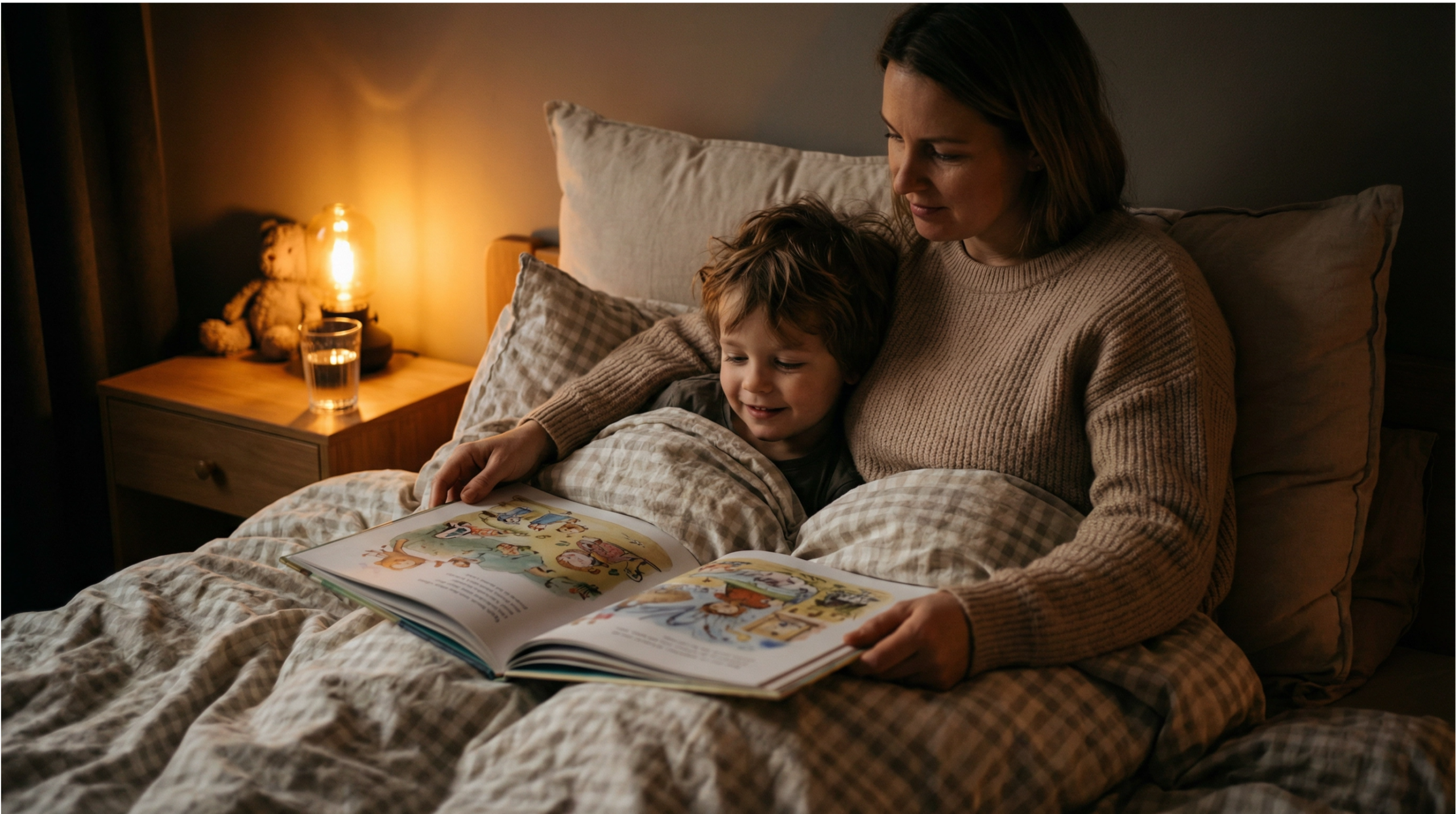
Moment de lecture parent et enfant livre bilingue

Reading in two languages, a more natural act than we think
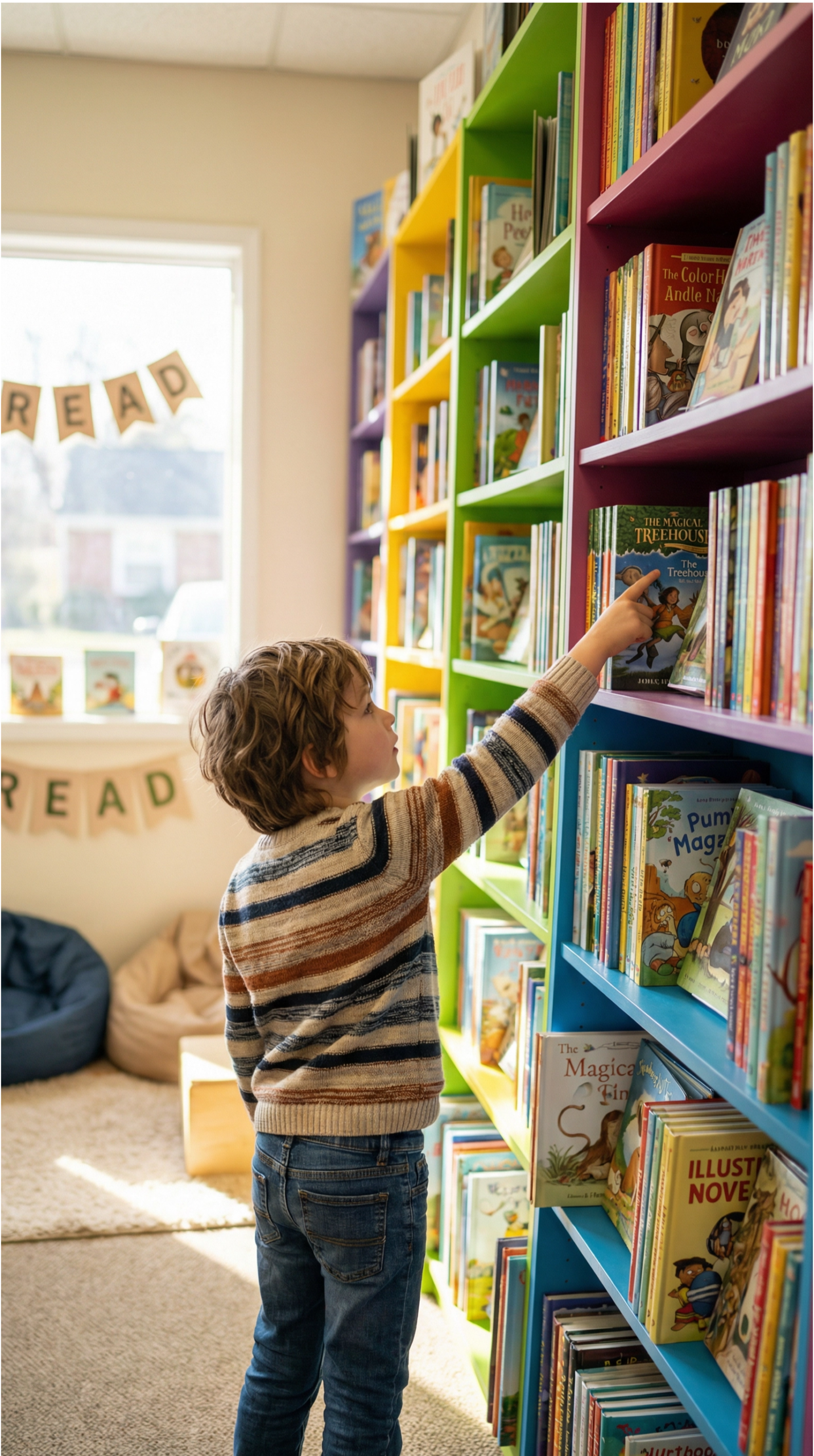
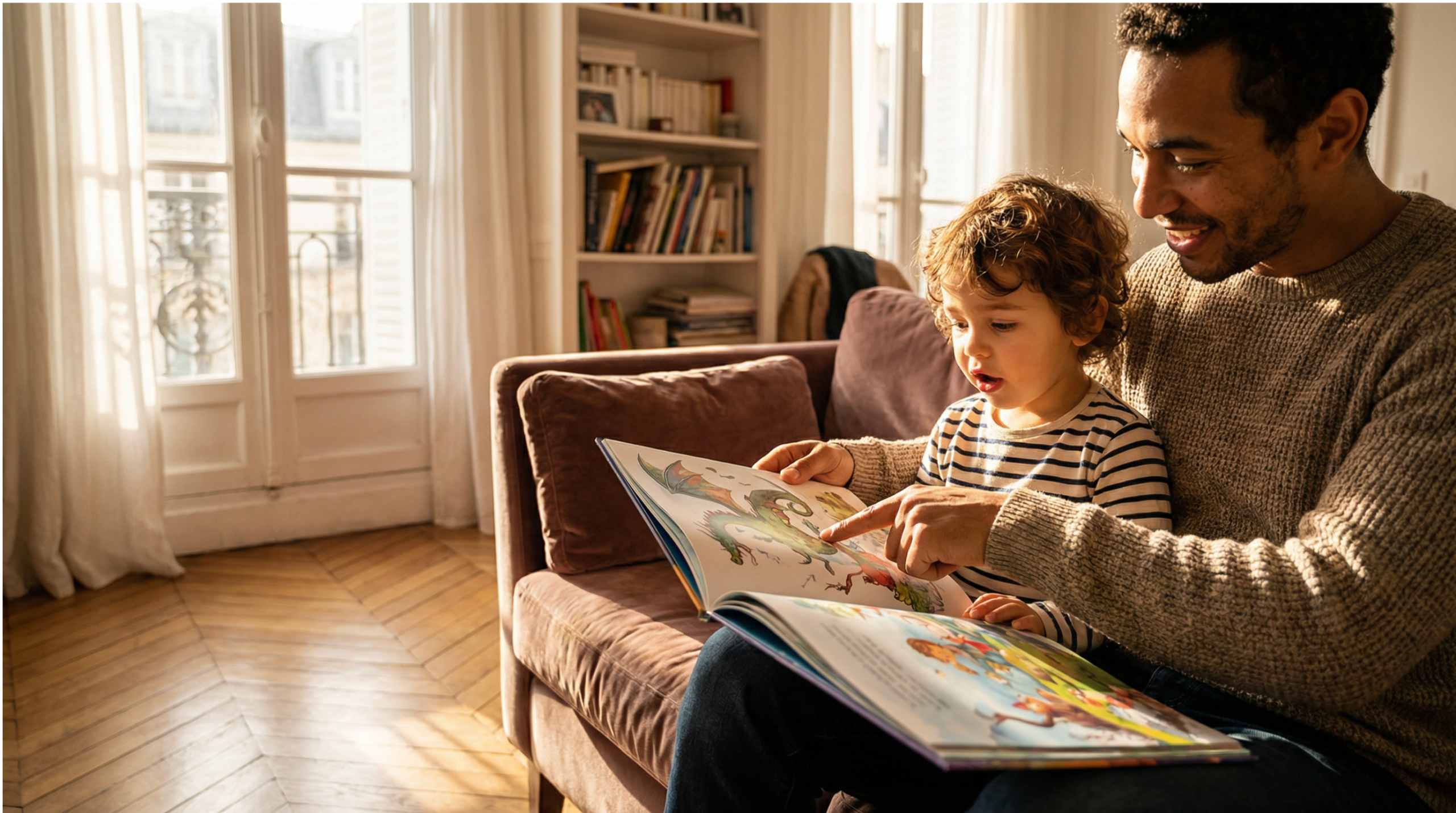
Many parents hesitate before handing an English book to a child who speaks mostly French, or the other way around. They worry it might complicate things, blur the learning process, or leave the child behind. And yet, shared reading in two languages is one of the most natural things a bilingual family can do. A young child does not draw the same distinction between a story in French and a story in English that an adult does. For them, it is first and foremost a voice, a rhythm, an emotion. They step into the world of the book before they think about the language it is written in. Research by psychologist Ellen Bialystok at York University in Toronto, published over the past two decades, shows that children regularly exposed to two languages develop stronger cognitive flexibility and selective attention. Reading aloud, in this context, is not a school drill. It is a playground. A picture book, a tactile board book, a story told in two voices — each of these moments builds something we do not always measure right away. The child absorbs intonations, sentence structures, ways of telling the world. They discover that words can change from one language to another without the meaning being lost. This is a deep, quiet, joyful kind of learning.
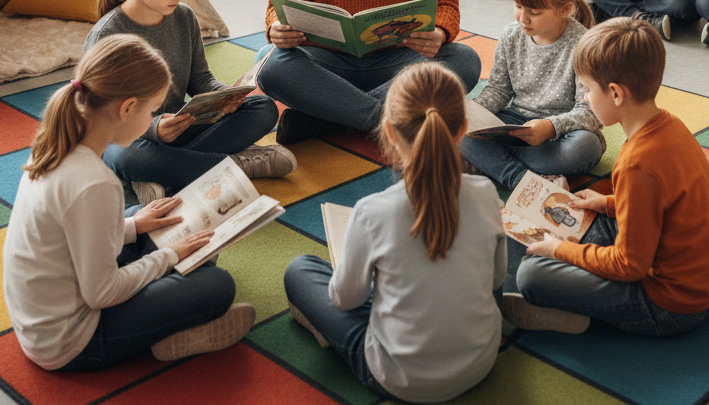
Groupe d'élève en atelier de lecture

The right book at the right time

There is no universal list, no perfect library. The book that hits the mark is the one the child asks for again. The one they grab from the shelf on a Sunday morning. The one whose sentences they know by heart before they can even read. For a toddler, a picture dictionary with simple words in both languages is enough to spark curiosity. Publishers like Barefoot Books, Usborne, and Albin Michel Jeunesse offer albums where the illustration carries the story as much as the text, allowing the child to move between languages with ease. Later, around five or six, alternating narratives — one chapter in French, the next in English — offer a dynamic reading experience in which switching languages becomes a pleasure rather than an obstacle.

Start with what the child loves

The surest path into bilingual reading is the child’s own interest. A child fascinated by animals will be captivated by an English-language animal book, even if French is their dominant language. Curiosity does the rest. You do not force reading — you create the conditions for it to happen. A book placed on the coffee table, a story offered without preamble, a voice that reads without expecting an answer: that is how the love of reading in two languages is born.

Alternate without rigid rules

Some families read in French at bedtime, in English in the morning. Others let the child choose. No method is superior to another. What matters is the regularity of exposure and the quality of the shared moment. Research in neurolinguistics confirms that naturally switching between two languages — what specialists call code-switching — is an integral part of bilingual development and is in no way a sign of confusion.

Books that tell stories differently

There are books that do more than translate. They weave languages into the text itself, play with sounds, invent bridges between words. These albums are precious because they show the child that bilingualism is not a juxtaposition of two worlds but a single, rich, living space. Collections like Oops & Ohlala from Talents Hauts and the Tip Tongue Kids series from Syros offer precisely this kind of experience, designed for children from age five.

The bedtime ritual as fertile ground

The bedtime story is often the only moment in the day when time truly stops. In that stillness, a bilingual book takes on a particular dimension. The child is available, their attention is whole. They listen, they look, they absorb. It is not a lesson. It is a conversation. And it is in those quiet conversations between a parent, a child, and a book that bilingualism takes root most lastingly.